Tuesday, 9 August 2011

Friday, 29 July 2011
Audio of Debate "Why does Street Photography make us paranoid."
Audio and Video highlights of Debate organised by 'the London Festival of Street photography' on why does street photography make us paranoid.
Panelists:Anna Minton, Author of 'Ground Control'
James Welch, Liberty legal director
Pennie Quinton, Photographer and Journalist
Dermont Robinson, Detective Superintendant, Head of Counter Terrorism, City of London Police
Terry Hanley, Planning and Contingency Director for Knightsbridge Guarding
[Audio] http://londonstreetphotographyfestival.org/uploads/whydoesstreetphotographymakeusparanoid_debateaudio.mp3
Video highlights of debate: "Why does street photography make us paranoid"Wednesday, 27 July 2011
http://saveKEMP.com

©Pennie Quinton 2011
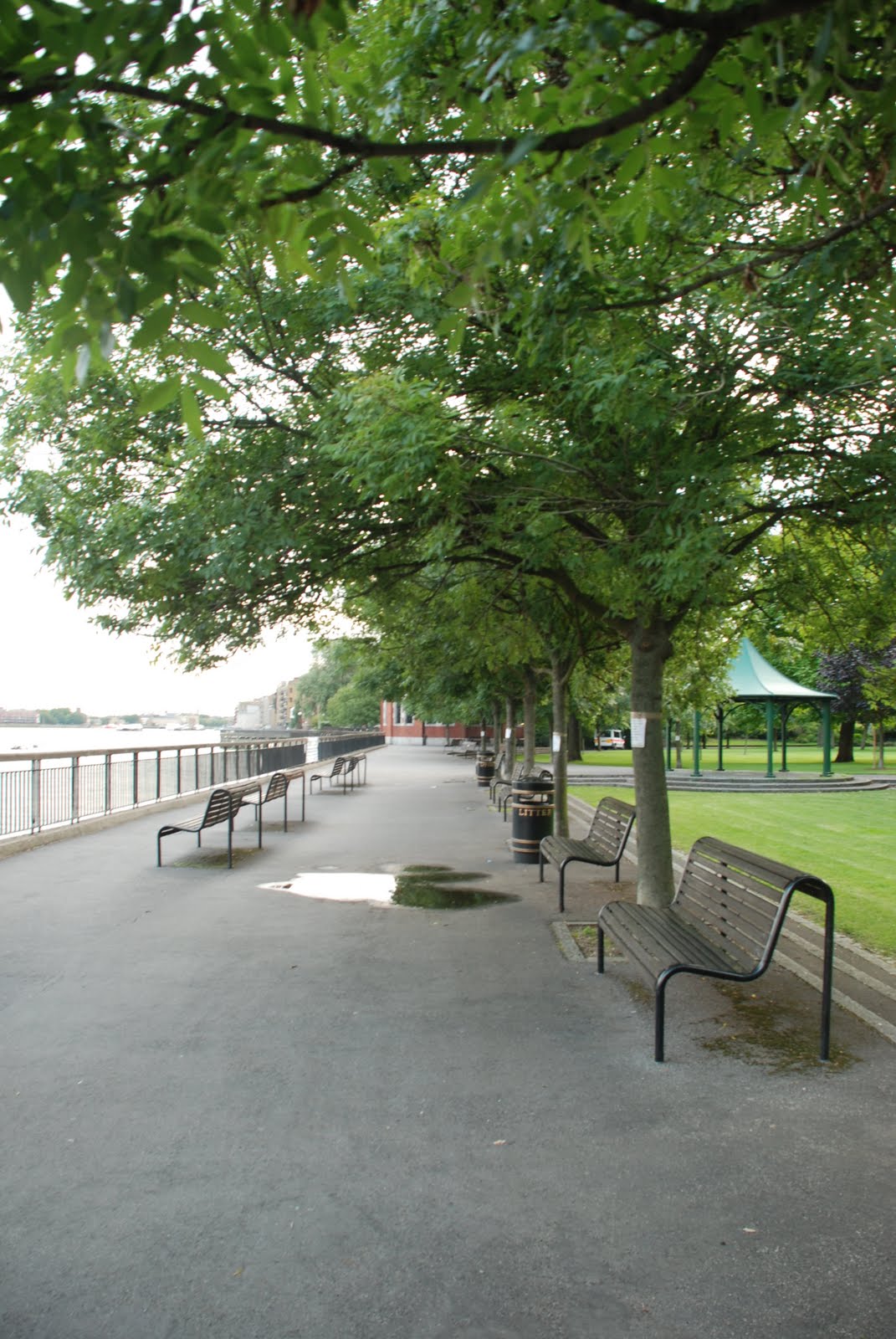
©Pennie Quinton 2011

©Pennie Quinton 2011

©Pennie Quinton 2011


©Pennie Quinton 2011

©Pennie Quinton 2011


Monday, 20 June 2011
'Unsung hero' Brian Haw, 1949-2011
On Sunday June 19, 2011, Brian Haw died peacefully in his sleep following a long fight against lung cancer.
Brian’s death ends his decade-long challenge to the British establishment and his constant reminder to Members of Parliament and civil servants entering the Houses of Parliament in London of the brutal effects on ordinary people of economic sanctions and wars in Iraq and Afghanistan.
On June 2, 2001, Brian Haw left his wife and seven children and his work as a carpenter to live day and night outside Parliament, to focus attention on the devastating impact of the economic sanctions on Iraq and the plight of children born with birth defects attributed to the use of depleted uranium munitions in the 1991 Gulf war.
Brian endured threats, violence and abuse for the duration of his protest. “I want to go back to my own kids and look them in the face again,” he wrote in 2002, “knowing that I've done all I can to try and save the children of Iraq and other countries who are dying because of my government's unjust, amoral, fear- and money-driven policies. These children and people of other countries are every bit as valuable and worthy of love as my precious wife and children.”
In 2003, when the UK and US commenced their war against Iraq, Brian began fasting and praying with other protesters who joined him in sleeping rough in Parliament Square. Laws were drafted and passed attempting to remove Brian – but he manage to remain.
Member of Parliament John McDonnell recalls how, with fellow-MP Tony Benn, he acted as a character witness for Brian in his many appearances in court, including some brought by the Metropolitan Police on accusations of aggression and assault. “Brian was bearing witness to the horrendous war crimes in Iraq, reminding MPs of their own guilt,” McDonnell says. “He was always willing to engage in debate but was continually harassed by the state. He remained a pacifist and a true democrat. Argument and debate were the only tools that he would use in his fight against injustice. He won repeatedly in court against the police.”
“Brian was in the British tradition of protest against great injustices,” McDonnell adds, “alongside the long-term picket outside the South African embassy against Apartheid.”
Jeremy Corbyn MP says Brian “single-handedly managed to irritate the British establishment simply by his presence in Parliament Square, every day reminding MPs of their preference for lies and deceit regarding Iraq and Afghanistan over the truth that British weapons and arms have destroyed thousands of innocent lives.”
Rikki Blue is an independent film-maker who covered many of the protests and events that spiraled out of Brian’s long struggle to remain in Parliament Square. He recalls that Brian “always worried about the kids. Everything that is wrong about war is that innocents die and the biggest symbol of innocence are children.”
“Brian demanded that the world stops killing kids,” Blue expands: “He was such an angry man but when he smiled it was like the heavens opened. He suffered so much persecution and violence during his time in the square – but nothing could shake his belief that killing kids is wrong.”
Emma Sangster, of the Voices in the Wilderness campaign against sanctions in Iraq, recalls how she first met Brian ten years ago: “Initially he had just three little placards – but he created a space where people could learn about the world in a way that was very formative before he was beleaguered by all the legal pressures the laws especially drafted to get rid of him.”
Later the authorities’ determination to remove him became more entrenched but, Sangster says, “truth was stranger than fiction in the ways he managed to survive and remain. In 2002 he won the case that made his protest lawful: he stood his ground but he was under lots of pressure day after day.”
“In 2004,” Sangster recalls, “I took my newborn son to meet Brian at a vigil at Downing Street. It was very special. Brian had great affection for my son Tom as well as all the children he met in Parliament Square.”
“His legacy,” Sangster concludes, “will be one of inspiration that people can stand up as individuals against the great wrongs. That was his message and it went all over the world. He was iconic, inspired by the Christian tradition of people who stand up and speak out: this was what drove him during the early period of his protest and is what I remember him most for.”
Milan Rai, an author and editor of Peace News also pays tribute: “We first met Brian while holding our Friday vigils in Parliament Square on the Iraq sanctions. We used to enjoy speaking with him and supporting him.”
Brian Haw became, Rai says, “a symbol for people in Britain who treasured him for speaking out against the lies that were told about the invasion of Iraq. He became a channel for people’s anger. Brian was motivated by a very deep love of children: he felt so fiercely about the plight of the children in Iraq, he was going to stand up for those children as if they were his own. He was a man of uncompromising principles who touched a chord.”
In 2004 I filmed Brian Haw welcoming American peace campaigner Cindy Sheehan, whose son had been killed in Iraq. Brian and Cindy threw their arms around each other and wept over the grim images of mutilated children arranged over Brian’s protest display. They both kept saying, “see what they are doing to the kids, see what they are doing to the kids.” Crowds of people followed them to the Prime Minister’s residence at 10 Downing Street, where they continued to protest for the rest of the day.
After the first year of his protest Brian had amassed a large number of placards denouncing US and British bombing of Iraq: the local authority, Westminster City Council, went to court to end the vigil. The judge, Mr Justice Gray declined, finding that: “This application raises questions as to the interaction between the right and the duty of a local authority to remove obstructions from its highways on the one hand, and the right of the individual citizen to use those highways to exercise his or her right to freedom of expression on the other hand… I am not satisfied in the circumstances of this case that there is any pressing social need to interfere with the display of placards so as to protect the right of others to pass and re-pass [the highway].”
One significant aspect of the case was an individual’s right under Article 10 of the European Convention on Human Rights, which guarantees freedom of speech. Mr Justice Gray added that he was “not persuaded” the defendant's placards could be considered advertising. “Looking at the issue of reasonableness in the round and taking account of the duration, place and purpose and the effect of the obstruction, as well as the fact that the defendant is exercising his Convention right,” Mr Justice Gray came to the conclusion “that the obstruction for which the defendant is responsible is not unreasonable: I decline to grant the injunction.”
After the ruling, Brian raced outside the courts and embraced a Buddhist monk and nun who had held a vigil outside the Royal Courts of Justice and told them: “God sends us good judges.” He pointed to pictures of sick Iraqi children, declaring: “This has been hidden from our people for so long. This is an abomination. If the people knew what is being done in their name in Iraq, they would be horrified.” Asked how long he would continue his protest he said: “As long as it takes. When do you give up on the kids?”
With the death of Brian Haw London has lost one its most unusual and distinctive landmarks. Anyone who passed the Houses of Parliament could hardly miss him. Another indicator of his wide impact was Britain’s most coveted art award, the Turner Prize, being won by Mark Wallinger for rebuilding Brian’s Parliament Square protest in the Tate Britain gallery.
John McDonnell now plans to put a resolution (an “Early Day Motion”) before the Houses of Parliament calling for the erection of “a monument to Brian Haw that celebrates peace, rather than celebrating war as do many of London’s great monuments.”
http://english.aljazeera.net/indepth/features/2011/06/201162081348694801.html
Monday, 30 May 2011
The revolution in heaven will not be televised

| The revolution in heaven will not be televised |
PENNIE QUINTON:…And I was hurt and scared and shocked when they sent a limousine from heaven to take her to God if there is one...1
Now that limousine has taken Gil Scott-Heron to heaven; and he will see to it that God, if there is one, has a lot of explaining to do. The revolution in heaven will not be televised, but poets undermine the power of empires and their words live on. I first heard ‘The revolution will not be televised’ on the grassroots independent media project www.indymedia.org when it was covering Prague ‘S26’ demonstration against the International Monetary Fund (IMF) on September 26, 2000. I was there for the demonstration – an overwhelming experience that changed my life and worldview.It sent shock-waves through governments and succeeded in focusing attention on issues such as the legitimacy of the IMF and the clash between World Trade Organization rules and UN environmental conventions. ‘The revolution will not be televised’ became the soundtrack for this unexpected metamorphosis. Despite first being released in 1970 (on Small talk at 125th and Lenox), in 2000 it resounded relevant and fresh amid the carnivalesque tactics of beautiful chaos of the pink- and-silver bloc that disrupted and halted the IMF conference. The Carnival Queen entered the lair of the IMF, through tear gas, police batons and street fighting, chasing the beast away from its prey (for the time being)2. There were cameras – our cameras – everywhere. This revolution was going to be televised, but with more than the one-sided, editorializing, clichéd mainstream media descriptions of ‘a hard core of demonstrators’. En route to the conference centre where the IMF were meeting, Prague’s high concrete Nusle Bridge was the scene of a long showdown between demonstrators and cops. The Italian Ya Basta group3 were at the front in home-made padding with plastic dustbin lid shields – a small army of Michelin people, taking the police blows and pepper spray. After many hours in solidarity linking arms and pushing forwards against the armoured personnel carriers of the Czech policie, we went for food. We emerged from a curry house an hour later onto Wenceslas Square to rejoin the crowds. Due to some planning error two unescorted buses carrying IMF delegates drove right into the middle of hundreds of milling protesters. At the sight of the crowds the delegates stared out at us frozen with terror, hanging tightly onto the yellow poles inside the bus, their complexions pale as the name-tags pinned to their neat dark suits. The crowd, also frozen in stunned silence, stared right back, unsure how to react. Here were the deciders of policies that impacted on so many lives worldwide, against which the protest had been struggling, vulnerable and exposed in our midst, staring fearfully at us staring confused and unsure back at them. Static-laden, the atmosphere was filled with potential confrontation. No-one knew what came next. A young woman darted out to the front of the bus, took out a spray can and sprayed a big smiley across the windscreen in shaving cream. There were cheers and laughter. The silence and tension was broken. A small regiment of riot police ran single-file into the crowd, briskly escorting the delegates off of the buses to their nearby hotel, refusing to acknowledge the surrounding crowds, then vanished as fast as they had come. Later, listening to this story reported on Indymedia radio; I was amazed and inspired by the track that followed: ‘The revolution will not be televised’. This song and the moment of confrontation between the IMF delegates and we, the people, are for me intertwined. The fear on the delegates’ faces and the fear that as a member of a mob I could be called to act violently against defenceless people acts as a reminder that we are all human and vulnerable and of how easy it is to abuse power at the moment we have power over another. The young woman with the can of shaving foam kept it real. Her gesture thawed the ice in which we were frozen at that tense moment. Over the next five years the anti-globalisation protests continued and the Indymedia phenomenon grew; expanding into radio, video and online projects across the world with the slogan ‘Don’t hate the media, be the media.’ From this dramatic introduction to protest and grass roots media I became involved in Indy media projects in: London, UK, France, Italy, Belgium, New York, Switzerland and Spain. That hearing of “the revolution will not be televised” on the streets of Prague completely changed the direction of my life and I played Gill Scott Heron regularly on the weekly radio slot I produced and hosted on Resonance FM for five years, Global Indy reports. Gil Scott-Heron’s words and music continued as an inspiration. And his poem ‘Whitey on the moon’ remains pertinent in the face of the government cuts and austerity measures while the banks are bailed out with business as usual:
Was all that money I made las’ year (for Whitey on the moon?) How come there ain’t no money here ? (Hmm! Whitey’s on the moon)... I think I’ll sen’ these doctor bills (to Whitey on the moon.)4
Global capitalism is failing the vast bulk of the world's population.
RIP Gil Scott-Heron: long live your words.
1‘Coming from a broken home’ Now and then: the poems of Gil Scott-Heron (2001) Edinburgh: Canongate, p 1 2Prague World Bank / IMF 2000 from A Year in the Streets http://www.youtube.com/watch?v=TFz4EHgt3Uk 3See interview at http://www.ainfos.ca/00/nov/ainfos00001.html 4‘Whitey on the moon’ Now and then: the poems of Gil Scott-Heron (2001) Edinburgh: Canongate, p 21 http://www.saatchi-gallery.co.uk/artandmusic/?cid=500&b_log=500 |
Subscribe to:
Posts (Atom)